The Technology, the Challenges, and the People behind the answer…
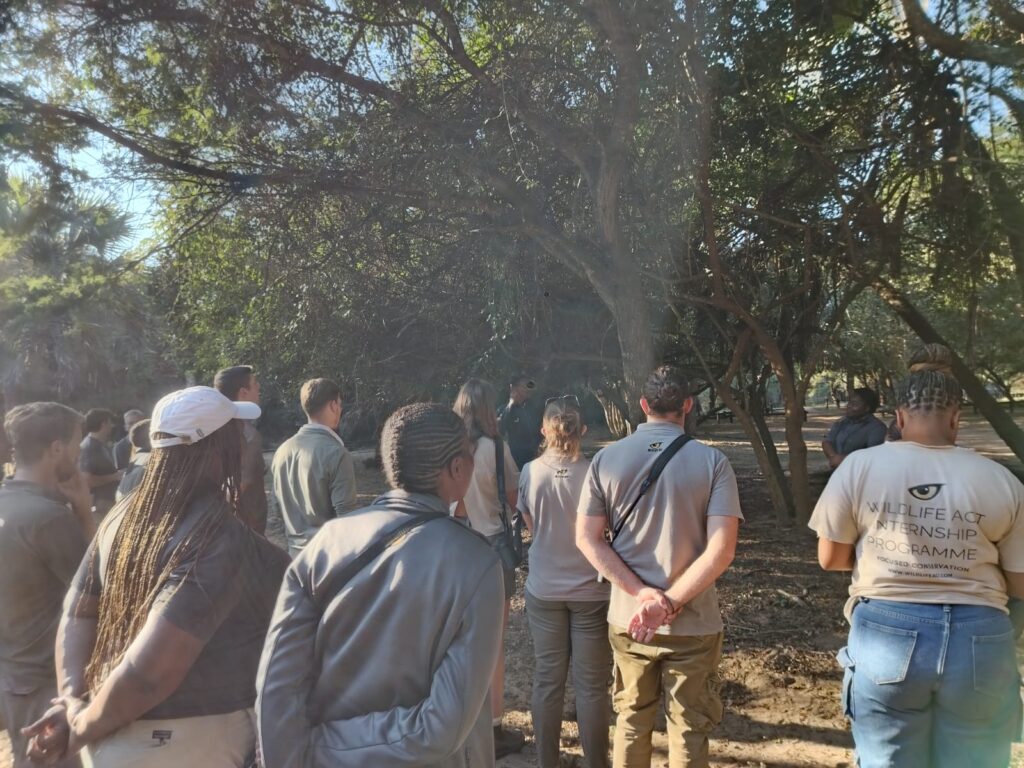
It was an honour to be invited to present at the biannual Wildlife ACT Workshop in June 2026, speaking on IoT (Internet of Things), VHF, Satellite and wildlife tracking developments for the year. The talk asked a simple question: wildlife moves constantly, and technology is continually evolving – so how do we keep up with the pace?
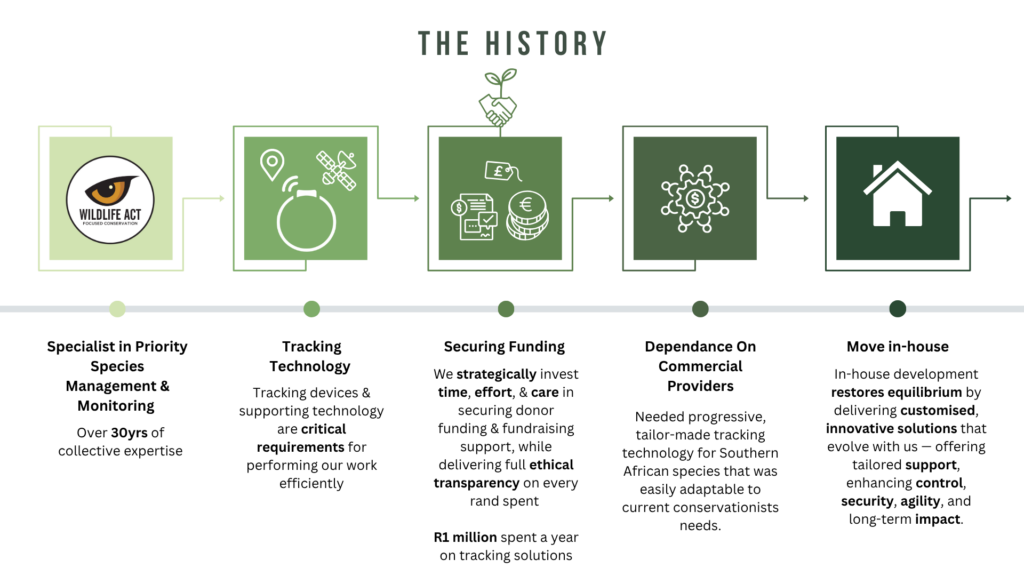
WildInno was formed in 2021 as a partnership between Wildlife ACT and AWE Telemetry Systems Pty Ltd, combining more than 35 years of field-proven technology and conservation experience. Its ethos is ethical, purposeful and reliable design for Africa, shaped through designing and working alongside conservationists in the field since our foundation.
The Technology Design, Build & Deployment Options
Four Pillars WildInno abide by: design and build tracking technology fit-for-purpose, ethically considered design centred on ecological and conservation experience, dedicated customer service from tailoring the product to deployment technical operations assistance and progressive software & hardware development.
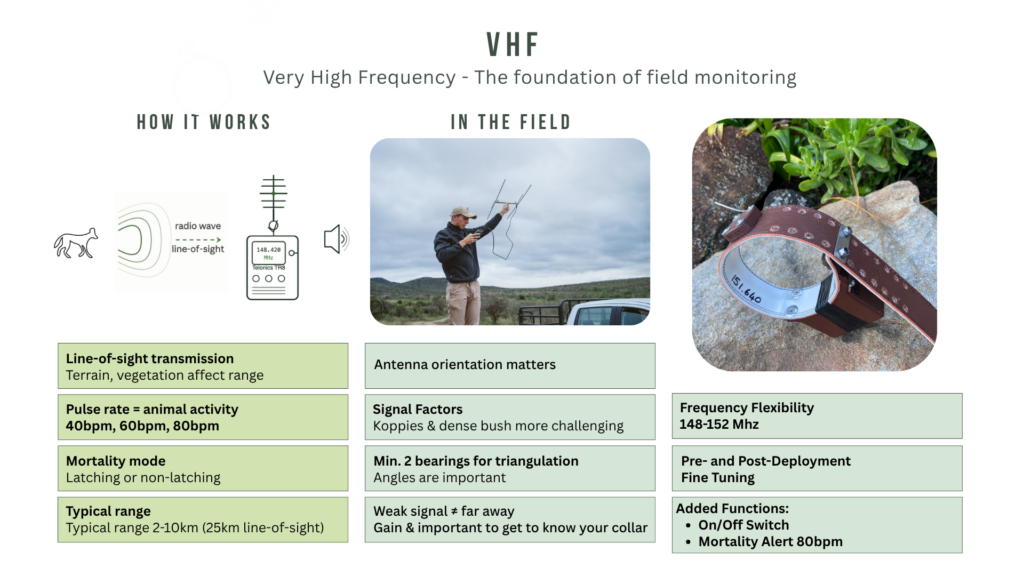
VHF: the foundation of field monitoring
VHF is line-of-sight radio, with a typical range of 2 to 10 km. Pulse rates indicate animal activity, and a mortality mode signals when a collar has stopped moving. It remains essential for on-the-ground tracking, where antenna orientation and at least two bearings matter.
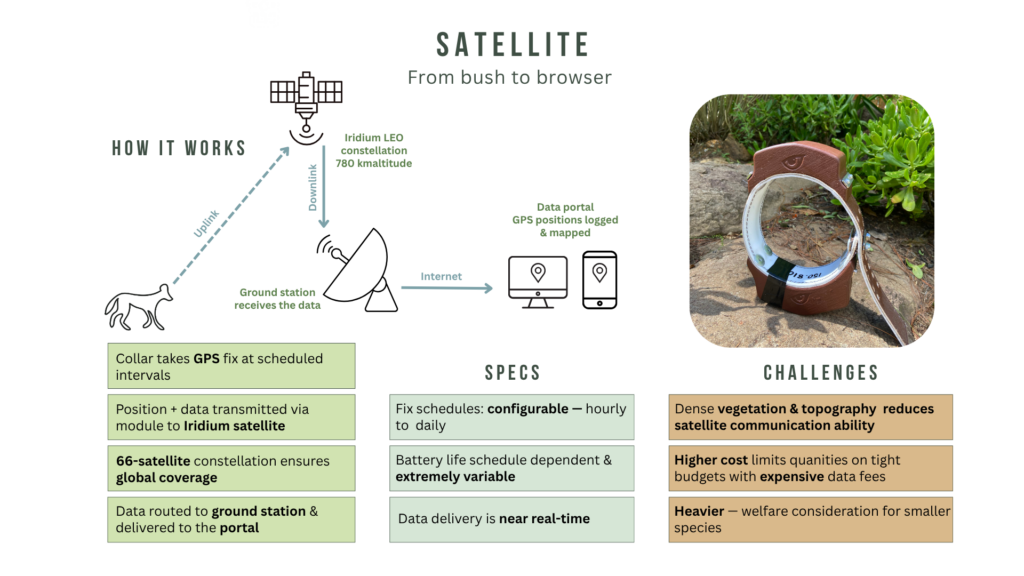
Satellite: from bush to browser
Satellite collars take scheduled GPS fixes and relay them through the Iridium constellation to a data portal in near real time, with global coverage. This tracking solution is highly suitable for wide-ranging species which often push the boundaries of a protected area, for near-live uplink data straight to platforms such as EarthRanger to optimise priority species monitoring & emergency response times.
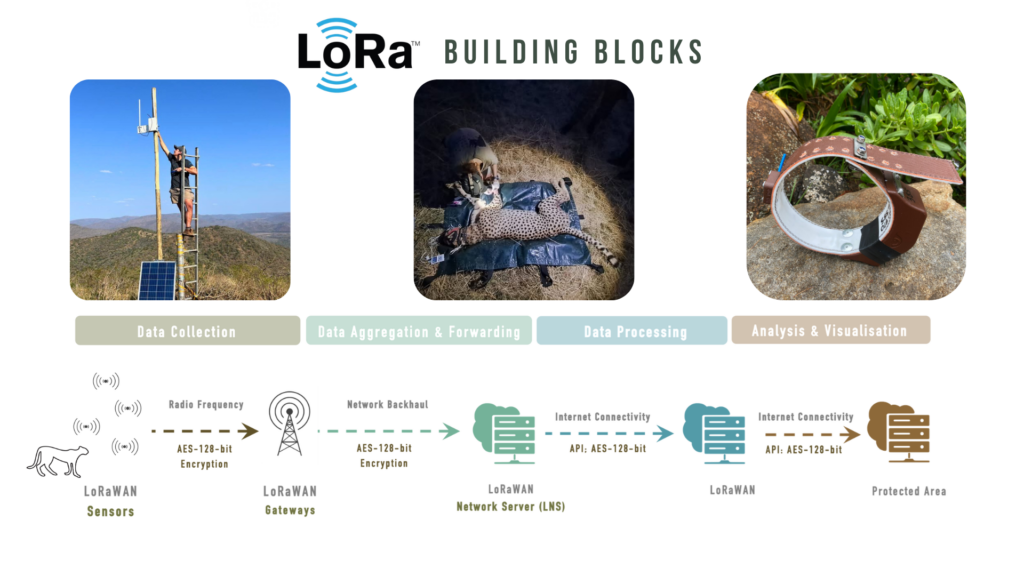
LoRaWAN is a complete wildlife-tracking system: lightweight collars send small GPS packets through solar-powered gateways, which reach the internet over wireless or cellular links and pass the data to platforms like EarthRanger. It matters for wildlife tracking because low-power, lighter and more affordable collars increase a protected area’s wildlife tracking capability and give conservation teams timely insight into how wildlife is moving across the landscape.
So What Comes Next? Conservationists decide.