Introduction to Rhino Conservation Challenges
Rhino poaching remains a critical threat to Southern African Black and White Rhinos, driving the need for innovative rhino conservation solutions. Between 2019 and 2020, conservationists in South Africa’s protected areas identified significant limitations in traditional rhino tracking methods, such as ankle bracelets. These devices, positioned low to the ground, suffered from a poor GPS signal due to limited skyview. Additionally, the rise of rhino dehorning—a humane process to deter poachers by removing horns—rendered older horn-based transmitters obsolete. Enter the Rhino Pod, a cutting-edge GPS tracking solution designed to enhance endangered species monitoring.
What is the WildInno Rhino Pod?
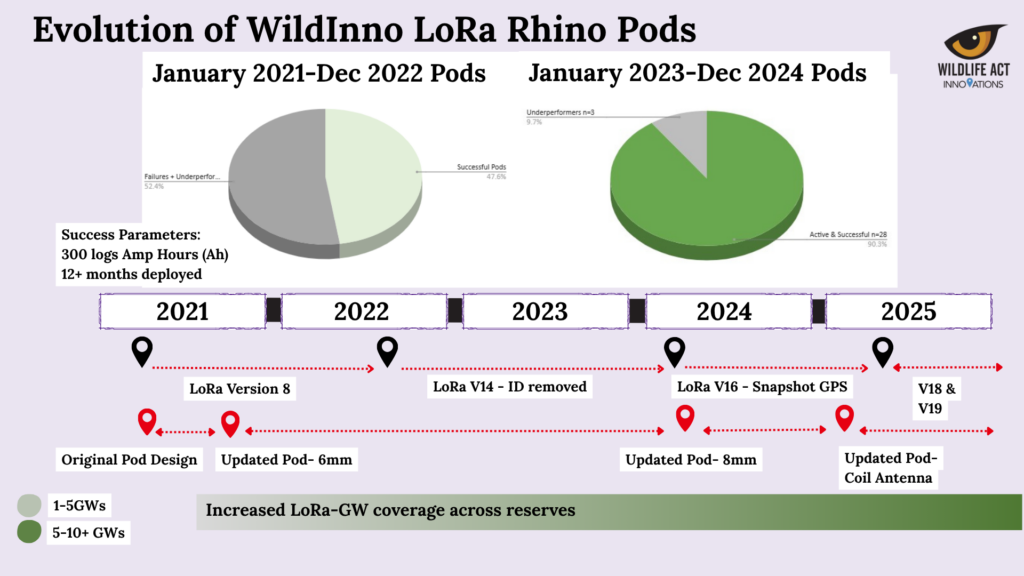
Developed by Wildlife ACT and its Innovations team in 2021, the Wild Inno Rhino Pod is a state-of-the-art GPS tracker for rhinos. Equipped with either a LoRa-GPS unit or a Very-High Frequency (VHF) transmitter, the Rhino Pod offers reliable, long-term tracking for dehorned rhinos. By 2025, the updated design boasts a 90.3% success rate (based on 2023-2024 data), making it a game-changer for wildlife monitoring in South African nature reserves.
Key Features of the Rhino Pod are fitted during scheduled dehorning operations, streamlining deployment.
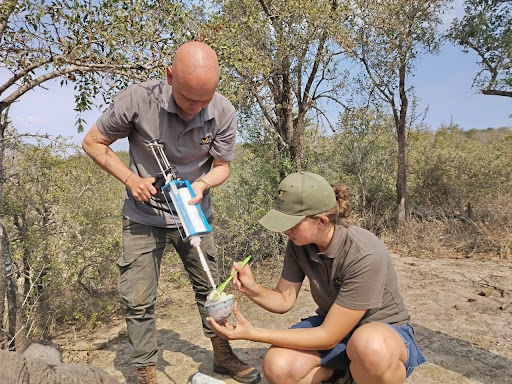
- Secure Attachment: Post-dehorning, the rhino’s horn base is prepped and cleaned, allowing the pod to bond securely using Equilox adhesive.
- Conservation Impact: Combining dehorning with advanced GPS tracking maximises protection for endangered rhinos.
The Role of LoRa Technology in Rhino Tracking
The Wild Inno Rhino Pod leverages LoRa technology, a low-power, long-range communication system ideal for remote areas. LoRaWAN coverage is established through strategically placed LoRa-Gateways around nature reserves, creating a network that enables real-time GPS tracking. This technology ensures that conservationists can monitor rhino movements hourly, enhancing wildlife protection and response times to potential threats.
Benefits of LoRa-Based GPS Tracking
- Reliability: Achieves a 90.3% success rate in GPS data transmission.
- Remote Accessibility: Delivers location data to monitors’ devices, enabling endangered species management from afar.
- Scalability: Easily integrates into existing reserve infrastructure, supporting broader wildlife conservation efforts.
How the Rhino Pod is Deployed
Deploying the Wild Inno Rhino Pod is a seamless process integrated with rhino dehorning operations:
- Selection: Reserve management and wildlife veterinarians identify key rhinos for tracking.
- Manufacturing: Pods are pre-ordered, manufactured and shipped by the WildInno team.
- Attachment: During dehorning, the pod is fitted to the rhino’s posterior horn using Equilox, a durable keratin adhesive.
- Monitoring: The pod logs GPS data hourly, providing critical insights into rhino movements.
Why Choose the WildInno Rhino Pod?
The Wild Inno Rhino Pod stands out in rhino conservation technology. Its high success rate, long battery life, and integration with LoRaWAN networks make it an essential tool for protecting Southern African rhinos. By combining dehorning with advanced GPS tracking, the Rhino Pod empowers conservationists to safeguard endangered species more effectively than ever before.
Get Involved in Rhino Conservation
Want to learn more about the Wild Inno Rhino Pod, LoRa technology, or rhino tracking options? Contact the Wild Inno team at info@wildinno.com for detailed information on pod performance, combined technologies, and how you can support wildlife conservation. Together, we work towards monitoring and protecting Southern African rhinos for future generations.